
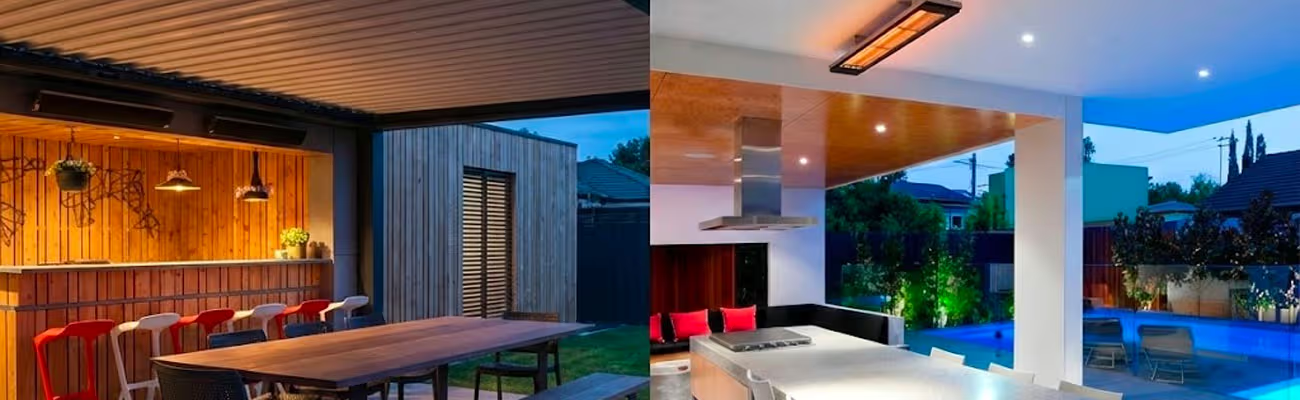
On a terrace, installation directly determines comfort.
A poorly positioned premium heater can underperform, whereas correct placement optimises the heated area, reduces losses and improves the immediate feeling of warmth.
1) Define the useful zone (before talking about watts)
Sizing should be based on the areas that are actually occupied (table, bench seating, service area), not the total surface. Ask yourself these three questions:
- Where do people remain still the longest (dining, lounge area)?
- Which part is exposed to the prevailing wind?
- What height is available under the pergola or overhang?
2) Recommended installation heights
Residential
1.80m to 2.20m
Denser perceived warmth, easy targeting.
Restaurants, bars, hotels / large terraces
2.40m to 3.00m
Balance between safety, coverage and evenness.
3) Wall, ceiling, structure: choosing the right mounting option
| Mounting type | Main advantage | Ideal use |
|---|---|---|
| Wall-mounted | Precise targeting, easy installation | Table / dining area, fixed zone |
| Ceiling-mounted | Even coverage, very discreet | Pergola, overhang, circulation area |
| On a structure (pergola) | Stability, protection, aesthetics | Premium project, frequent use |
4) Orientation and Safety: the critical points
Orientation (the No. 1 mistake)
The infrared heater must be aimed at the occupied zone. The usual recommendation is a 30° to 45° angle towards the people (depending on mounting height).
Electrical rules and safety
- Strict compliance with safety clearances (wall, ceiling, flammable materials, fabrics).
- A protected circuit (correctly rated breaker) is strongly recommended for higher power outputs.
5) Frequently asked questions
Can you install an infrared heater yourself?
Yes, if you are comfortable with the mounting and the compliant electrical connection. Keep in mind, however, that final performance will depend above all on how accurately it is positioned (height, angle, zone targeting).
Should you plan a dedicated electrical circuit?
This is strongly recommended as soon as the power level becomes significant. It makes the installation safer and avoids voltage drops or performance losses caused by wiring and shared loads.
Before finalising the installation, compare Heatstrip infrared heaters and Heatscope heaters to identify a format suited to your mounting height and heating area.