
Radiant heating for conservatories and sunrooms
Enjoy high-performance, discreet and condensation-free electric heating for your veranda or conservatory. A gentle, economical solution suited to glazed spaces.
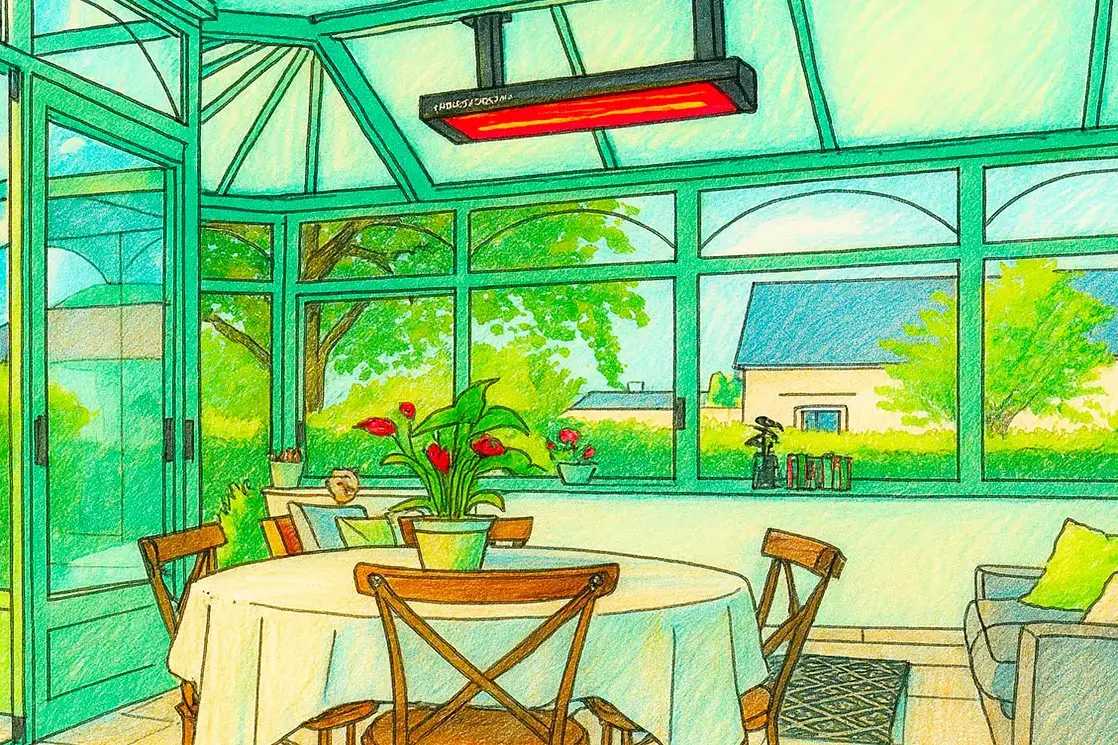
Enjoy year-round thermal comfort without condensation or overheating
Conservatories and sunrooms are transitional spaces between indoors and outdoors. Bright and pleasant to live in, they can quickly become too cold in winter or difficult to heat effectively with traditional systems. Electric radiant heating offers an efficient, invisible, and silent solution perfectly suited to these glazed spaces.
Heating options for a conservatory: advantages and disadvantages
Heating a conservatory requires compensating for heat loss through large glazed surfaces without causing condensation or excessive energy bills. Each technology has its own characteristics.
- Electric radiant or infrared heating warms people and surfaces directly rather than the air, providing responsive, targeted comfort.
- Portable gas heating may seem affordable, but has significant drawbacks and risks indoors or in a partly enclosed space.
- An air-to-air heat pump is energy efficient, but installation is more complex and costly, with an outdoor unit and duct routes; air movement may also feel uncomfortable.
- A wood or pellet stove provides welcoming warmth but requires a flue, fuel storage and regular maintenance.
- Extending central heating works well if planned during construction, but involves substantial, costly connection work in a renovation.
Why is gas heating a poor choice for a conservatory?
Despite a sometimes attractive purchase price, portable gas heating is strongly discouraged inside a conservatory because of several serious risks.
- Combustion can release carbon monoxide, an invisible, odourless and potentially fatal gas if combustion or ventilation is inadequate. A conservatory is too sealed to ensure safety without constant ventilation, which would undermine the heating benefit.
- Gas combustion produces substantial water vapour, worsening condensation on cold glazing and creating damp conditions conducive to mould. An unpleasant gas odour may also persist.
- Buying, transporting, storing and connecting gas cylinders adds a significant logistical burden.
Modern electric heating produces no combustion, avoiding these combustion-related dangers and inconveniences.
Why choose radiant heating for a conservatory?
Unlike convection heaters that circulate air and often cause condensation on glass, radiant heaters warm people and surfaces directly. They don’t circulate warm air but emit gentle heat by radiation, making them ideal for:
- Effective heating without causing misting or humidity
- Maintaining a comfortable temperature even in highly glazed structures
- Preserving the aesthetics of the space with slim, discreet models
- Providing instant comfort without waiting for warm-up
Which type of infrared for conservatories?
For conservatories, medium or long-wave devices (IR-M or IR-C) are preferred as they provide gentle warmth suitable for prolonged use and compatible with glazed structures.
Avoid short-wave infrared heaters (IR-A), better suited for very open or windy areas.
What does infrared conservatory heating cost?
Assess overall cost over the long term. A quality infrared system costs more initially than a simple convector, but targeted efficiency and responsive use can reduce energy consumption and offset the investment.
For example, a 2000 W (2 kW) appliance running at full power uses about €0.50 per hour at an illustrative electricity price of €0.25/kWh. Intelligent use helps control the expense.
Recommended power and installation
Power depends on the size and insulation of the conservatory:
- 8 to 12 m2: 2,000 to 2,400 W
- 12 to 20 m2: 2,800 to 3,600 W
- Above 20 m2: possibility to install two heaters facing each other
Installation tips:
- Mount heaters at a height of 2.30 to 2.70 metres.
- Direct radiation towards occupied zones (seating, table, loungers)
- Use ceiling or wall mounts depending on configuration
- Choose an IP rating suitable for moisture-prone conservatories (minimum IP24)
Recommended products examples
- HEATSTRIP® Elegance: ultra-thin design, perfectly integrated into conservatory ceilings
- HEATSCOPE® Vision: gentle heat, invisible light, ideal for prolonged use
- Models with thermostat or remote control: to adjust temperature by time of day
Old vs modern conservatories: key differences
Older conservatories are often poorly insulated and require higher power or more direct heating. Modern aluminium double-glazed conservatories allow efficient use of gentle infrared radiation.
Heating can also be automated using smart home boxes or intelligent regulation systems based on time or outdoor temperature.
Also to consult
Want to heat your conservatory without altering it? Contact our advisors for a tailored recommendation based on your technical, aesthetic and energy constraints.