
Infrared patio heating: technical guide
Infrared patio heating guide: how it works, power, mounting height, zones to heat, covered or open terraces and common mistakes to avoid.
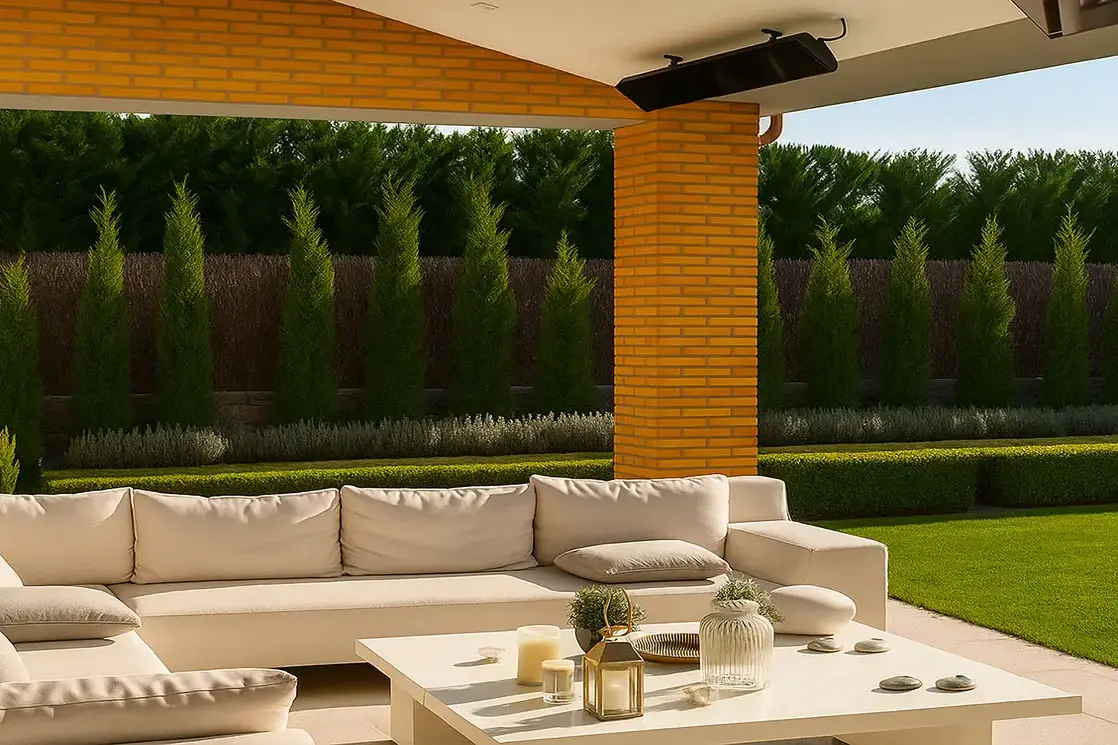
This guide explains how infrared patio heating works and how to size it correctly for a covered, partly open or exposed outdoor area.
For model selection and purchase, use the electric patio heater page.
Technical choice criteria
Start with the actual layout: mounting height, distance to users, wind exposure and the occupied zones matter more than floor area alone.
Why radiant heat works outdoors
Infrared heat warms people and surfaces directly, so it stays useful where warm air would quickly disperse.
Power, height and coverage
Plan by comfort zones such as tables, lounge areas, counters or waiting areas, then adapt the heater power and angle.
Wall, ceiling or freestanding mounting
Ceiling and wall mounting are usually cleaner and more stable. Freestanding heaters are useful when no structure is available.
Priority use cases
Pergola and conservatory
Choose discreet integration, gentle warmth and mounting suited to the structure.
Restaurant terrace
Size the system by tables and circulation zones. See the restaurant terrace heating page.
Mobile heating
Useful as a supplement or for occasional needs, but less stable than a correctly directed fixed installation.
Patio heating FAQ
Is electric patio heating suitable for windy conditions?
Yes, if the appliance is close enough and directed towards the occupied area. Wind mainly reduces the effectiveness of systems that heat the air.
Should you choose Heatstrip or Heatscope?
Heatstrip is often chosen for power and large terraces. Heatscope is preferred for design, visual comfort and premium spaces.
How many heaters does a terrace need?
The number depends on the zones to cover, mounting height and exposure. Sizing by zone is more reliable than calculating by square metres alone.
If the project is still open, read the guide to choosing an outdoor heater.